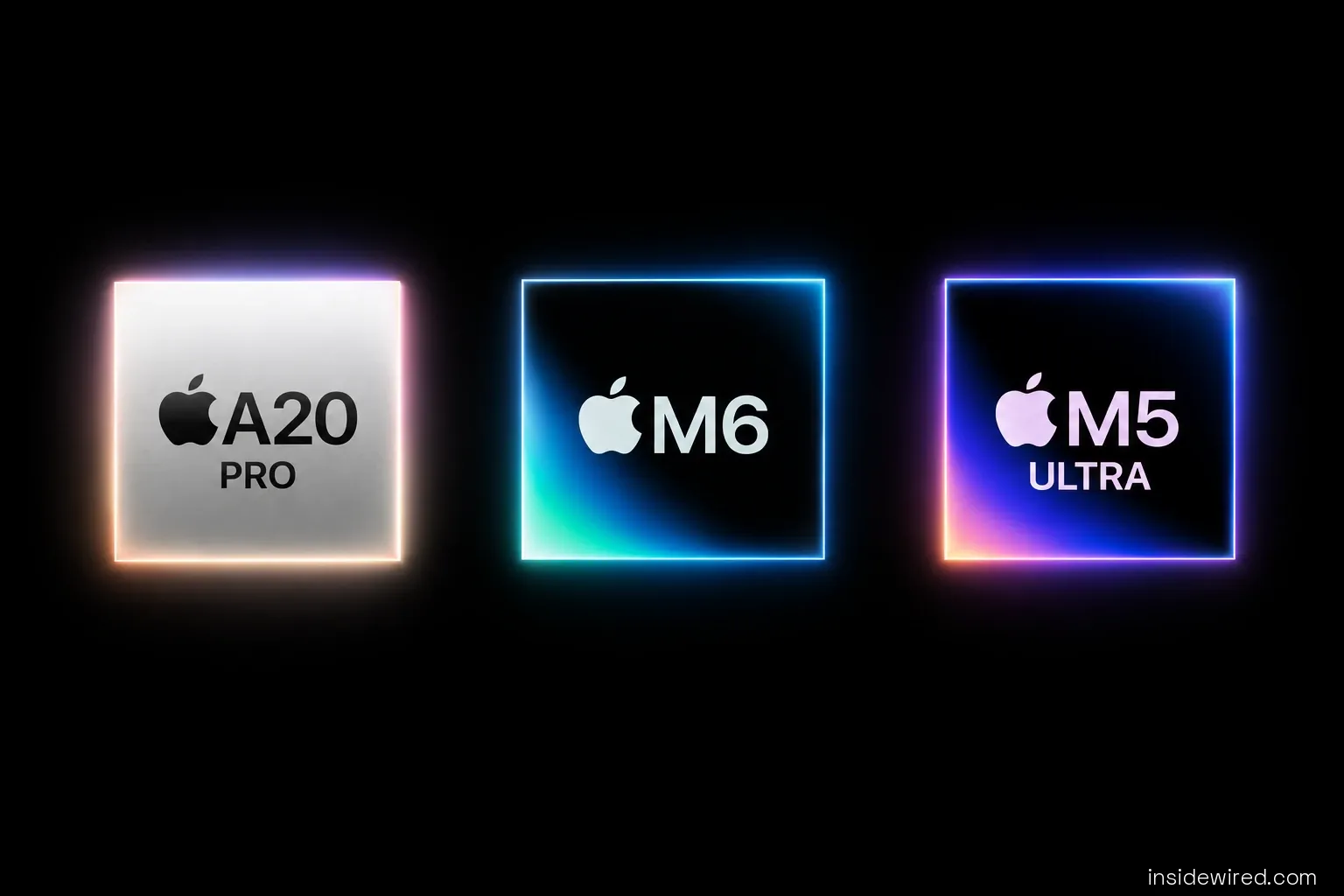
The arrival of the M6 marks a new milestone for Apple Silicon with its transition to 2nm manufacturing. Compared to the M5, which has been available since October 2025, this new generation introduces several advancements in performance, energy efficiency, and processing tasks related to artificial intelligence.
One of the main enhancements of the M6 is its move to a 2nm fabrication process. This transition allows Apple to improve the overall performance and energy efficiency of its new generation of chips. Furthermore, the chip evolves its CPU architecture with three specialized types of cores: "super cores," performance cores, and efficiency cores. Apple presents its new super cores as particularly suited for workloads that require strong single-thread performance.
Core Technical Enhancements Over M5
The advancements detailed in the M6 concern more than just general performance. Apple has continued to adapt its architecture for graphics processing and AI-related workloads, offering increased CPU, GPU, and memory resources compared to the M5 generation.
Compared to the M5, several key features have progressed significantly:
- CPU Performance: Apple announces multithreaded performance that can reach 1.2× that of the M5.
- AI Capabilities (Neural Engine): The M6 integrates a dual 16-core Neural Engine, offering up to double the maximum computing power of previous generations. System frameworks can utilize both engines simultaneously to accelerate model execution.
- GPU: The chip incorporates a 12-core GPU, an increase from 10 cores on the M5. Notably, each GPU core also features a dedicated Neural Accelerator for AI-related processing.
- Memory Bandwidth: It reaches 170 GB/s, up from 153 GB/s seen on the M5, supporting up to 32 GB of unified memory.
In summary, the M6 brings several technical advancements compared to the M5, highlighted by its move to the 2nm fabrication process, refined CPU architecture, and increased capabilities for both graphics processing and artificial intelligence tasks.